The one process now going on that will take millions of years to correct is the loss of genetic and species diversity by the destruction of natural habitats. This is the folly our descendants are least likely to forgive us.
Edward O. Wilson
My research interests center on understanding mechanisms of phenotypic evolution in natural populations. I am particularly interested in investigating how interactions between ecological forces and genetic mechanisms lead to evolutionary change. My approach to these broad questions is necessarily integrative, and utilizes field ecology, quantitative and population genetics, and molecular biology. I have chosen to focus on container-breeding mosquitoes as a model because these mosquitoes represent highly tractable experimental systems.

MORE ON HIS RESEARCH...
RESEARCH NEWS FOCUS: PETER ARMBRUSTER
My main research work is in biodiversity, alien species and the ecology of arthropods. Students and I are working on the arthropods of Dyke Marsh Preserve of the National Park George Washington Memorial Parkway. Several recent field studies include alien invasive plant species and soil arthropods.
MORE ON HIS RESEARCH...
RESEARCH NEWS FOCUS: EDD BARROWS
My research includes three areas of focus in bioinformatics/computational biology, all of which are loosely tied by the underlying theme of molecular evolution. The first area is genome/gene sequence analysis and annotation, which involves applying concepts of molecular evolution to infer function, as well as using bioinformatics approaches to understand genome evolution. The second area is the development of databases that allow others to benefit from our work in genome analysis and annotation. We are developing genome databases for honey bee (BeeBase.org) and cattle (BovineGenome.org).The third area is developing algorithms for better classifying proteins; these algorithms will serve as tools for molecular evolution and annotation.
MORE ON HER RESEARCH...
RESEARCH NEWS FOCUS: CHRIS ELSIK
I am deeply intrigued by the processes that influence the distribution of genetic variation within species. My empirical projects focus on either marine fish populations or plant populations. Research in my laboratory focuses on fundamental questions in evolutionary biology, population genetics and conservation genetics. I am interested in gene flow and population structure, the interplay of effective population size and natural selection, and inferring population demographic histories from genetic data. I frequently use simulation modeling to develop expectations for the behavior of genetic systems under idealized evolutionary processes. My lab also employs molecular genetic methods such as microsatellite genotyping and DNA sequencing to estimate key population genetic parameters such as effective population size, degree of population structure and rates of gene flow.
MORE ON HIS RESEARCH...
RESEARCH NEWS FOCUS: MATT HAMILTON
My research in Shark Bay, Australia, began with a longitudinal study, the Dolphin Mother-Infant Behavioral Ecology Project, initiated in 1988. We’ve studied over 80 calves born to 60+ mothers and are examining a number of problems concerning calf development, female reproduction, genetics, ecology and behavior. I am generally interested in why bottlenose dolphins have such slow life histories, why females invest substantially in each calf, and what factors predict female reproductive success. These questions have both theoretical and applied (conservation and management) value.
MORE ON HER RESEARCH...
RESEARCH NEWS FOCUS: JANET MANN
Plant-insect interactionsMy research focuses on the role of behavior, by both plants and insects, in mediating interactions among the two groups of organisms. The sensory and behavioral attributes of insects, including vision, taste, smell, and touch, as well as a capacity to learn and remember, ultimately shape the insects' ability to interact with and exert selection on plants and on other insects. Similarly, the active 'behavior' of plants allows them to take advantage of insects' sensory and behavioral capabilities.
MORE ON HER RESEARCH...
RESEARCH NEWS FOCUS: MARTHA WEISS
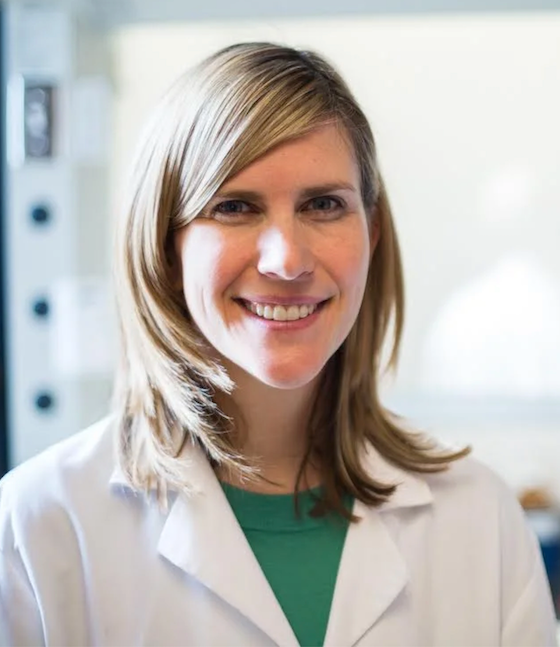
My research seeks to discover general rules that govern arthropod community structure that may serve as tools for conservation. I have found that plant genetics plays a critical role in shaping arthropod community structure, but the extent to which plant genetics affects higher-level trophic interactions remains a topic of debate which I am pursuing. My research also focuses on the role of anthropogenic disturbance and habitat fragmentation on arthropod community structure in inter-tidal marshes. I am using stable isotope analysis to understand how arthropod species losses in the inter-tidal marsh may affect nutrient cycling in these critical ecosystems that act as buffers to adjacent estuaries. Arthropod conservation has not received the same consideration as vertebrate species conservation, yet arthropods represent over half of the described species on the planet and their losses could have cascading effects throughout diverse ecosystems.
MORE ON HER RESEARCH...
RESEARCH NEWS FEATURE OF GINA WIMP